
Learning essential guitar chords is a fundamental step for any guitarist, whether you’re a beginner or an experienced player. Chords are the building blocks of music and understanding them is crucial for playing songs, writing music, and improvising. By mastering the basic chords, you’ll have a solid foundation to build upon and expand your skills as a guitarist.
Key Takeaways
- Mastering the basics of guitar chords is essential for any beginner.
- Understanding chord structures and progressions is key to playing more complex songs.
- Basic open chords are a great starting point for beginners.
- Barre chords and their variations allow for more versatility in playing.
- Power chords are commonly used in rock and metal genres.
The Importance of Mastering the Basics
Mastering the basics of guitar chords is essential for any guitarist’s development. It provides a strong foundation for playing more complex songs and allows you to explore different styles of music. When you have a good grasp of the basic chords, you’ll be able to play a wide variety of songs and easily transition between chords.
In addition, mastering the basics of guitar chords helps with improvisation. When you understand chord structures and progressions, you can create your own chord progressions on the spot and improvise melodies over them. This opens up a whole new world of creativity and allows you to express yourself through your guitar playing.
Understanding Chord Structures and Progressions
Chord structures refer to the combination of notes that make up a chord. The most basic chord structure is a triad, which consists of three notes: the root, the third, and the fifth. The root is the starting note of the chord, the third determines whether the chord is major or minor, and the fifth adds depth and richness to the sound.
Chord progressions are sequences of chords that form the backbone of a song. They create tension and release, and give a sense of movement and direction to the music. Understanding chord progressions allows you to analyze songs, write your own music, and improvise over existing songs.
Basic Open Chords for Beginners
| Chord Name | Finger Position | Number of Fingers Used | Difficulty Level |
|---|---|---|---|
| C Major | 1st finger on 1st fret of B string, 2nd finger on 2nd fret of D string, 3rd finger on 3rd fret of A string | 3 | Easy |
| G Major | 1st finger on 2nd fret of A string, 2nd finger on 3rd fret of E string, 3rd finger on 3rd fret of E string | 3 | Easy |
| D Major | 1st finger on 2nd fret of G string, 2nd finger on 2nd fret of E string, 3rd finger on 3rd fret of B string | 3 | Easy |
| A Major | 1st finger on 2nd fret of D string, 2nd finger on 2nd fret of G string, 3rd finger on 2nd fret of B string | 3 | Easy |
| E Major | 1st finger on 1st fret of G string, 2nd finger on 2nd fret of A string, 3rd finger on 2nd fret of D string | 3 | Easy |
For beginners, it’s important to start with some basic open chords. Open chords are played in the first few frets of the guitar and use open strings. Some of the most common open chords for beginners include G, C, D, and E.
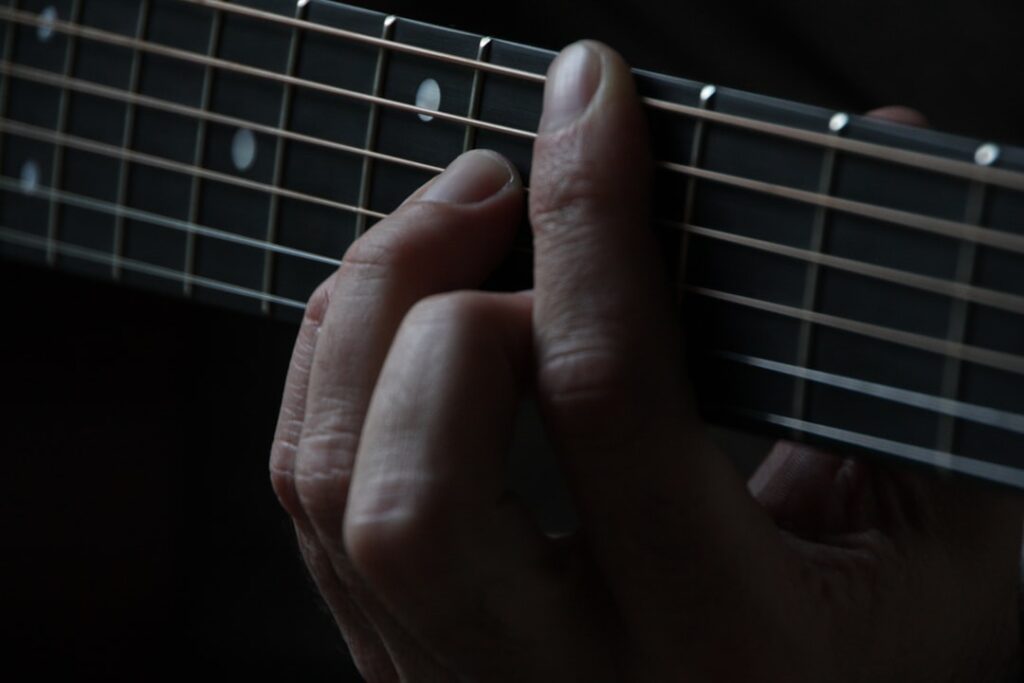
The G chord is played by placing your second finger on the third fret of the low E string, your third finger on the third fret of the B string, and your fourth finger on the third fret of the high E string. The C chord is played by placing your first finger on the first fret of the B string, your second finger on the second fret of the D string, and your third finger on the third fret of the A string. The D chord is played by placing your first finger on the second fret of the G string, your second finger on the second fret of the high E string, and your third finger on the third fret of the B string. The E chord is played by placing your first finger on the first fret of the G string, your second finger on the second fret of the A string, and your third finger on the second fret of the D string.
Barre Chords and Their Variations
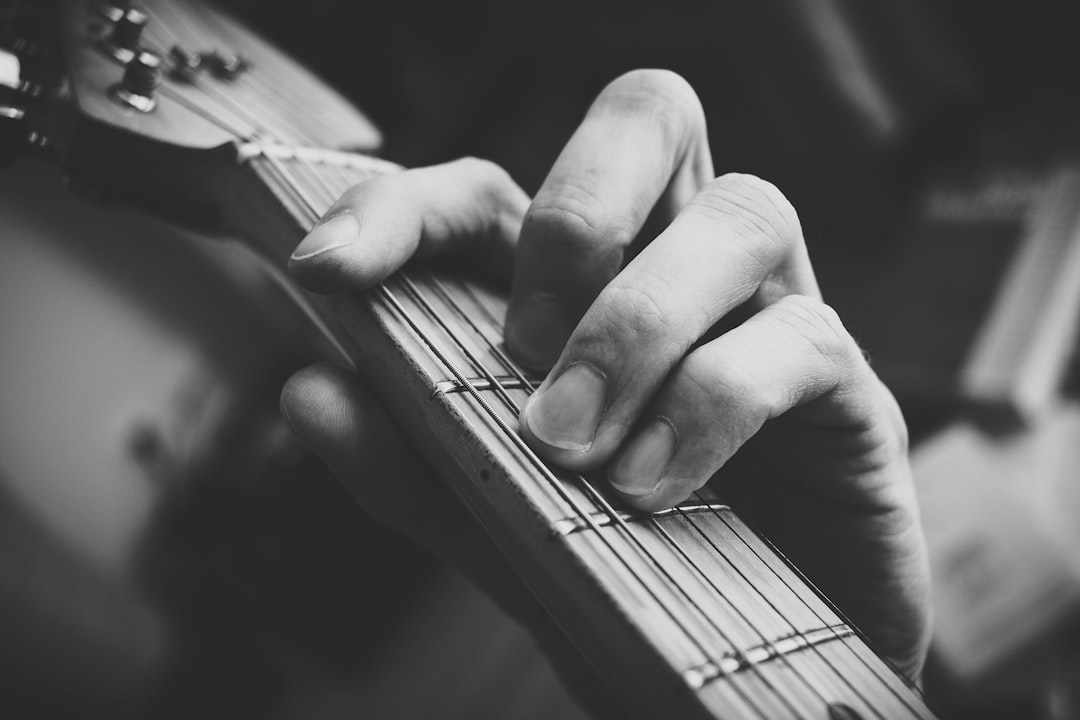
Barre chords are a bit more challenging than open chords but are essential for expanding your chord vocabulary. Barre chords are formed by using one finger to press down multiple strings across a single fret. This allows you to play chords in different positions on the neck and gives you access to a wider range of sounds.
Some common barre chord shapes include the F major shape, which is played by barring all six strings with your index finger on the first fret and using your other fingers to form an E major shape; and the A major shape, which is played by barring all six strings with your index finger on a specific fret and using your other fingers to form an A major shape.
To make playing barre chords easier, it’s important to have good hand strength and technique. Practice regularly and start with simpler barre chord shapes before moving on to more complex ones.
Power Chords and Their Usage

Power chords are a staple in rock and metal music. They are simple two-note chords that consist of the root note and the fifth. Power chords are played by placing your first finger on the root note and your third or fourth finger on the fifth, usually on the same string.
Power chords are used to create a heavy and aggressive sound. They are often played with distortion and can be moved up and down the neck to create different chord progressions. Power chords are great for beginners because they are easy to play and can be used in a wide variety of songs.
Popular Guitar Chords in Different Genres
Different genres of music have their own signature chords that are commonly used. For example, in folk music, the A minor chord is often used to create a melancholic and introspective sound. In pop music, the F#m chord is frequently used to add a touch of sophistication and emotion.
Learning these popular guitar chords in different genres can help you expand your musical vocabulary and adapt to different styles of music. It allows you to play songs from various genres and adds depth and richness to your playing.
Techniques for Smooth Chord Transitions
Transitioning smoothly between chords is one of the biggest challenges for beginner guitarists. It requires coordination between your left hand, which forms the chords, and your right hand, which strums or picks the strings.
To improve your chord transitions, practice slowly and deliberately. Start by practicing each chord individually, making sure that each note rings out clearly. Then, practice transitioning between two chords at a time, focusing on accuracy and timing. Use a metronome to keep a steady rhythm and gradually increase the tempo as you become more comfortable.
Tips for Memorizing Chord Progressions
Memorizing chord progressions is essential for playing songs, improvising, and writing music. It allows you to internalize the structure of a song and play it without having to refer to chord charts or sheet music.
To memorize chord progressions, break them down into smaller parts and practice them in different keys. Start by learning the individual chords in the progression and then practice transitioning between them. Once you’re comfortable with the individual chords, practice playing the entire progression in different keys to develop your muscle memory.
Guitar Lessons for Essential Chord Mastery
If you’re serious about mastering essential guitar chords, consider taking guitar lessons. There are many resources available, both online and offline, that can help you improve your skills.
Online courses and tutorials are a convenient option for those who prefer to learn at their own pace. There are many websites and platforms that offer comprehensive Guitar Lessons, ranging from beginner to advanced levels. These courses often include video lessons, interactive exercises, and downloadable materials.
If you prefer a more hands-on approach, consider taking lessons at a local music school or hiring a private guitar teacher. This allows you to receive personalized instruction and feedback, which can greatly accelerate your learning process.
In conclusion, mastering essential guitar chords is crucial for any guitarist’s development. It provides a strong foundation for playing more complex songs, improvising, and writing music. By understanding chord structures and progressions, learning basic open chords, barre chords, power chords, and popular chords in different genres, practicing smooth chord transitions, and memorizing chord progressions, you can become a versatile and skilled guitarist. So keep practicing, keep learning new chords, and enjoy the journey of becoming a better musician.
FAQs
What are basic guitar chords?
Basic guitar chords are a set of chords that are commonly used in many songs. They are usually easy to play and are the foundation of most guitar playing.
How many basic guitar chords are there?
There are many basic guitar chords, but the most common ones are the A, C, D, E, G, and F chords. These chords are used in many songs and are easy to learn.
How do I play basic guitar chords?
To play basic guitar chords, you need to place your fingers on the frets of the guitar and strum the strings. Each chord has a specific finger placement, which you can learn by following chord diagrams or watching tutorials.
What are some songs that use basic guitar chords?
Many popular songs use basic guitar chords, such as “Wonderwall” by Oasis, “Sweet Home Alabama” by Lynyrd Skynyrd, and “Knockin’ on Heaven’s Door” by Bob Dylan. These songs are great for beginners to practice their chord progressions.
Do I need to know basic guitar chords to play the guitar?
Yes, knowing basic guitar chords is essential to playing the guitar. They are the building blocks of most songs and are necessary for creating chord progressions and melodies.