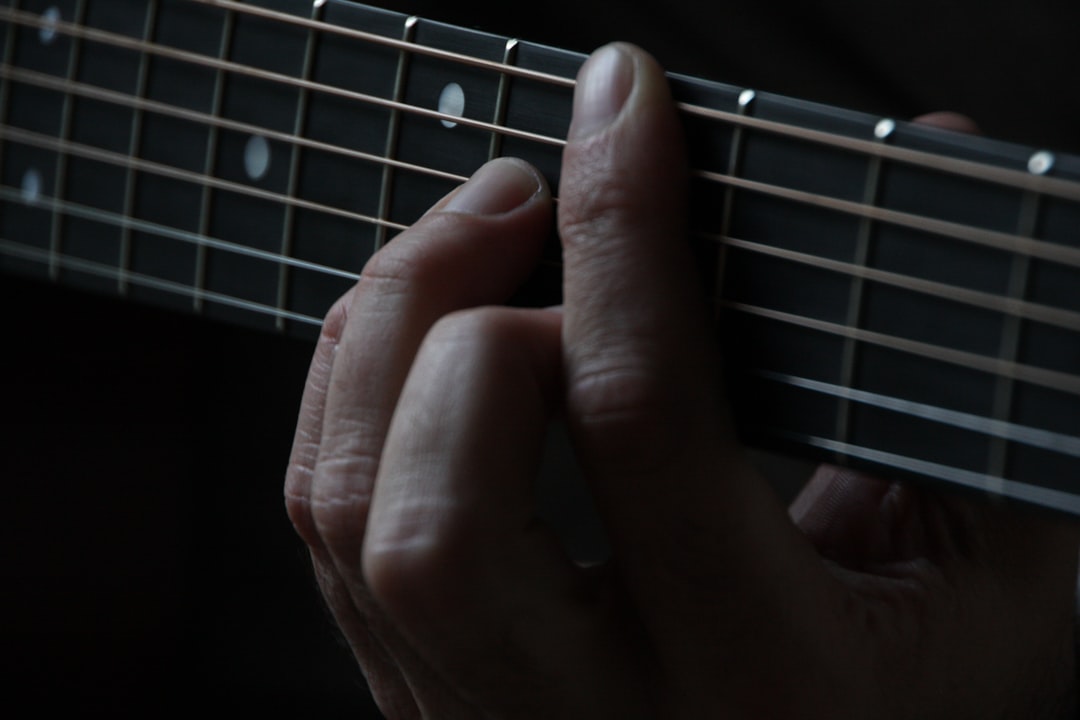


Learning to play the guitar is an exciting journey that opens up a world of musical possibilities. Whether you dream of strumming along to your favorite songs or writing your own music, mastering guitar chords is the first step. While it may seem daunting at first, with practice and patience, anyone can learn to play the guitar. In this blog post, we will cover the basics of guitar chords and provide tips for beginners to get started on their musical journey.
Key Takeaways
- Easy guitar chords are a great starting point for beginners
- Basic guitar terminology and notation are important to understand
- Understanding guitar strings and frets is crucial for playing chords
- Properly holding and tuning a guitar is essential for good sound
- Essential open chords and common chord progressions are key to playing songs
Basic Guitar Terminology and Notation
Before diving into chords, it is important to understand some basic guitar terminology and notation. The guitar consists of six strings, each with a different pitch. The strings are usually tuned to E, A, D, G, B, and E from low to high. The neck of the guitar is divided into sections called frets. When you press down on a string against a fret, you change the pitch of the note produced.
To read chord diagrams, you need to understand the basic symbols used. The vertical lines represent the strings of the guitar, with the thickest string on the left and the thinnest string on the right. The horizontal lines represent the frets on the neck of the guitar. The numbers on the diagram indicate which fingers to use and where to place them on the strings.
Understanding Guitar Strings and Frets
The guitar has six strings, each with a different pitch. From low to high, the strings are usually tuned to E, A, D, G, B, and E. To create chords, you need to press down on the strings against the frets using your fingers. The frets are metal bars that divide the neck of the guitar into different notes.
To play a chord, you place your fingers on specific frets and strings to create different combinations of notes. By pressing down on a string against a fret, you change the pitch of the note produced. It is important to use the tips of your fingers to press down on the strings and avoid touching adjacent strings to prevent unwanted buzzing or muting.
How to Hold and Tune a Guitar
| Topic | Description |
|---|---|
| Holding a Guitar | Proper posture and hand placement for comfortable playing |
| Tuning a Guitar | Methods for tuning a guitar, including using a tuner or tuning by ear |
| String Names | The names of each guitar string, from thickest to thinnest |
| Standard Tuning | The most common tuning for a guitar, EADGBE |
| Alternate Tunings | Other tunings used for specific songs or styles of music |
| Intonation | Adjusting the guitar’s intonation for accurate pitch across the fretboard |
| Changing Strings | Steps for removing and replacing guitar strings |
Holding the guitar correctly is crucial for playing chords comfortably. When sitting down, rest the body of the guitar on your right leg (if you are right-handed) or your left leg (if you are left-handed). The neck of the guitar should be angled slightly upward, allowing your left hand to easily reach the frets.
To tune a guitar, you can use an electronic tuner or tune by ear. An electronic tuner is recommended for beginners as it provides accurate tuning. Start by tuning the thickest string (E) to the correct pitch using the tuner. Then, use that string as a reference to tune the other strings by pressing down on the fifth fret of each string and comparing it to the next string played open.
Essential Open Chords for Beginners
Open chords are the easiest chords to learn and are used in many popular songs. They are called open chords because they include open strings that are not pressed down on any frets. Some essential open chords for beginners include G, C, D, and E minor.
To play a G chord, place your second finger on the third fret of the thickest string (E), your third finger on the third fret of the second string (A), and your fourth finger on the third fret of the first string (E). Strum all six strings starting from the thickest string.
To play a C chord, place your first finger on the first fret of the second string (B), your second finger on the second fret of the fourth string (D), and your third finger on the third fret of the fifth string (A). Strum from the fifth string down.
To play a D chord, place your first finger on the second fret of the third string (G), your second finger on the second fret of the first string (E), and your third finger on the third fret of the second string (B). Strum from the fourth string down.
To play an E minor chord, place your second finger on the second fret of the fifth string (A) and your third finger on the second fret of the fourth string (D). Strum from the sixth string down.
Common Chord Progressions and Strumming Patterns

Chord progressions are the order in which chords are played in a song. Some common chord progressions for beginners include G-C-D and C-Am-F-G. These progressions are used in countless songs across different genres.
To practice chord progressions, start by strumming each chord individually to ensure that you can play them cleanly. Once you are comfortable with each chord, try playing them in sequence. Start with a slow tempo and gradually increase the speed as you become more comfortable.
Strumming patterns are the rhythm in which chords are played. They can vary depending on the style of music and personal preference. A basic strumming pattern for beginners is down, down, up, up, down. Start by strumming all six strings on a downstroke, then strum the top four strings on an upstroke, followed by a downstroke on all six strings again.
Playing Chords with a Capo
A capo is a tool that can be used to change the key of a song without changing the chords. It is placed across the neck of the guitar and acts as a movable nut. By using a capo, you can play open chords in different keys and create different sounds.
To use a capo, place it across the desired fret on the neck of the guitar. For example, if you place the capo on the second fret, the open chords you play will sound two semitones higher. This allows you to play in different keys without having to learn new chord shapes.
Tips for Practicing and Improving Chord Transitions
Practicing chord transitions is key to becoming a better guitar player. Here are some tips to help you improve your chord transitions:
1. Start Slow: Begin by practicing each chord individually and then gradually increase the speed as you become more comfortable. Focus on accuracy and clean transitions rather than speed.
2. Use a Metronome: A metronome is a tool that helps you practice timing and rhythm. Set the metronome to a slow tempo and practice transitioning between chords on each beat. As you become more comfortable, increase the tempo.
3. Practice Common Chord Progressions: Focus on practicing chord progressions that are commonly used in songs. This will help you become familiar with transitioning between chords that are frequently used together.
4. Visualize the Next Chord: Before transitioning to the next chord, visualize where your fingers need to go. This will help your fingers move more smoothly and quickly.
5. Practice Daily: Consistency is key when learning any new skill. Set aside dedicated practice time each day to work on your chord transitions.
How to Read Guitar Tablature (Tabs)
Guitar tablature, or tabs, is a way to read music specifically for guitar. Tabs use numbers on horizontal lines to indicate which frets to press down on and which strings to play. The thickest string is represented by the bottom line, while the thinnest string is represented by the top line.
For example, if there is a number 3 on the second line from the bottom, it means you should press down on the third fret of the second string (A). If there is a 0 on a line, it means you should play that string open.
Tabs are a useful tool for learning songs and can be found online for almost any song. They provide a visual representation of where to place your fingers on the guitar neck.
Recommended Online Guitar Lessons and Resources for Beginners
There are many online resources available for learning guitar. Here are some recommendations for beginners:
1. JustinGuitar: JustinGuitar is a popular website that offers free guitar lessons for beginners. The lessons are well-structured and cover a wide range of topics, from basic chords to more advanced techniques.
2. Yousician: Yousician is an interactive guitar learning app that provides step-by-step lessons and real-time feedback. It is available for both iOS and Android devices.
3. Ultimate Guitar: Ultimate Guitar is a website that offers a vast collection of guitar tabs for songs across different genres. It also provides chord diagrams and strumming patterns for each song.
While online resources can be helpful, taking lessons from a teacher can provide personalized guidance and feedback. A teacher can help you develop proper technique, answer your questions, and tailor lessons to your specific goals and interests.
In conclusion, learning guitar chords is the first step to playing your favorite songs. While it may seem challenging at first, with practice and patience, anyone can learn to play the guitar. By understanding basic guitar terminology and notation, mastering chord transitions, and utilizing online resources or lessons from a teacher, you can embark on an exciting musical journey. So grab your guitar, start practicing those chords, and get ready to make beautiful music!
FAQs
What are chords?
Chords are a combination of three or more notes played together to create harmony in music.
What is the importance of learning chords for beginners?
Learning chords is essential for beginners as it helps them to understand the basic structure of music and enables them to play a wide range of songs.
What are some common chords for beginners?
Some common chords for beginners include C major, G major, D major, A major, E major, and F major.
How do I read chord diagrams?
Chord diagrams are a visual representation of where to place your fingers on the fretboard. The horizontal lines represent the frets, and the vertical lines represent the strings. The numbers on the dots indicate which finger to use.
What is the best way to practice chords?
The best way to practice chords is to start with simple chords and practice transitioning between them. It is also important to practice proper finger placement and to use a metronome to improve timing.
What are power chords?
Power chords are a type of chord that consists of only two notes, the root note and the fifth note. They are commonly used in rock and metal music.
What is a barre chord?
A barre chord is a type of chord where the index finger is used to press down multiple strings at once. They are commonly used in a variety of genres and can be challenging for beginners to master.