

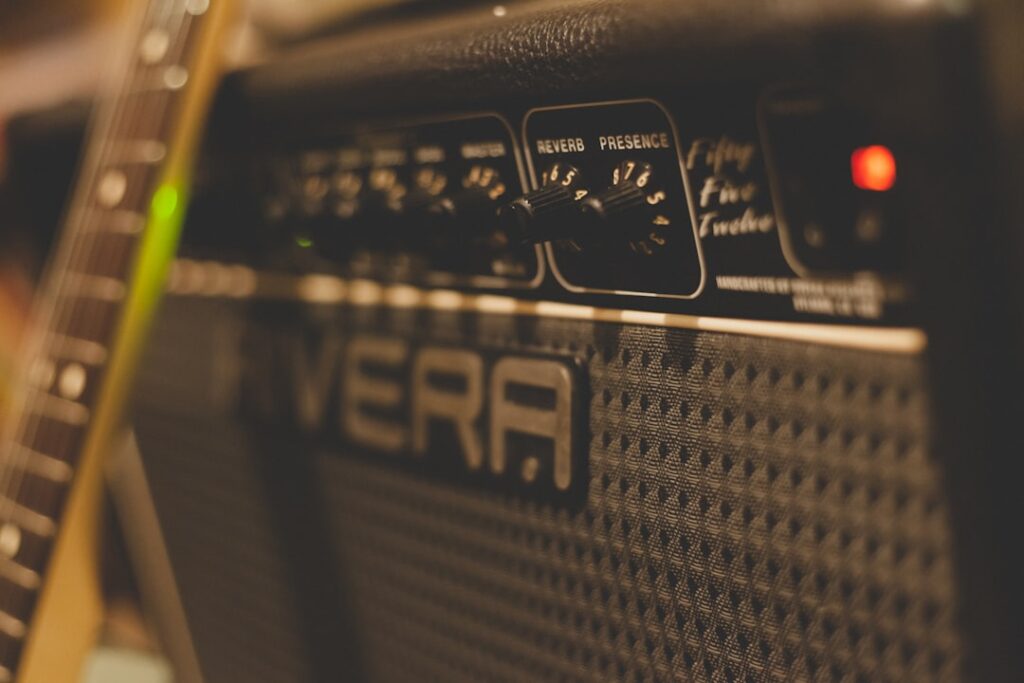
The Fender Twin Reverb is a legendary amplifier that has been a staple in the music industry for over five decades. It was first introduced in 1963 as a part of Fender’s “blackface” series of amplifiers, which were known for their clean tones and lush reverb. The Twin Reverb quickly gained popularity among musicians for its powerful 85-watt output and its ability to deliver crystal-clear tones at high volumes. The amp’s dual 12-inch speakers and dual channels made it a versatile choice for both guitarists and bassists.
In the late 1960s, Fender introduced the “silverface” series, which featured a silver control panel and a slightly different circuit design. The Twin Reverb continued to be a popular choice for professional musicians and became a mainstay on stages around the world. Over the years, the amp has undergone various updates and reissues, but it has always maintained its reputation for delivering pristine clean tones and lush reverb. Today, the Fender Twin Reverb is still highly sought after by guitarists and bassists alike, and it continues to be a go-to choice for players who value classic Fender tone and reliability.
Understanding the Features and Controls of the Fender Twin Reverb
The Fender Twin Reverb is known for its simple yet effective control layout, which allows players to dial in their desired tone with ease. The amp features two independent channels, each with its own volume, treble, and bass controls. This allows for a wide range of tonal options, from sparkling cleans to warm, full-bodied tones. The amp also features built-in reverb and vibrato effects, which can be adjusted using the dedicated controls on the front panel.
In addition to its basic controls, the Fender Twin Reverb also features a presence control, which allows players to adjust the high-frequency response of the amp. This can be particularly useful for fine-tuning the amp’s tone to suit different playing styles and musical genres. The amp also features a bright switch, which can be engaged to add extra sparkle to the high end of the tone. Overall, the Fender Twin Reverb’s control layout is intuitive and user-friendly, making it easy for players to achieve their desired tone without having to navigate through complex menus or settings.
Getting the Best Tone from Your Fender Twin Reverb
To get the best tone from your Fender Twin Reverb, it’s important to understand how each control affects the amp’s overall sound. Start by setting the volume controls on each channel to a comfortable level, and then adjust the treble and bass controls to achieve a balanced tone. Experiment with the presence control to fine-tune the high-frequency response, and engage the bright switch if you want to add extra sparkle to your tone.
The built-in reverb and vibrato effects can also be used to enhance your tone. Experiment with different settings to find the right amount of reverb and vibrato for your playing style. Keep in mind that less is often more when it comes to effects, so try not to overdo it. Finally, consider using external pedals or effects processors to further shape your tone. Overdrive pedals, EQ pedals, and modulation effects can all be used in conjunction with the Fender Twin Reverb to create a wide range of tones.
Tips for Using Effects with the Fender Twin Reverb
| Effect Type | Recommended Settings | Notes |
|---|---|---|
| Reverb | Medium decay, low mix | Enhances the amp’s built-in spring reverb |
| Delay | Short to medium delay time | Creates spacious and ambient sounds |
| Overdrive | Low to medium gain | Complements the amp’s natural overdrive |
| Tremolo | Medium depth, slow speed | Produces classic pulsating effect |
When using effects with the Fender Twin Reverb, it’s important to consider how each effect will interact with the amp’s natural tone. Overdrive pedals can be used to push the amp into natural overdrive, adding warmth and grit to your tone. EQ pedals can be used to shape the amp’s frequency response, allowing you to tailor your tone to suit different playing styles and musical genres. Modulation effects such as chorus, flanger, and phaser can be used to add depth and movement to your tone, while delay and reverb pedals can be used to create ambient textures.
It’s important to experiment with different effects and settings to find the right combination for your playing style. Keep in mind that the Fender Twin Reverb’s clean tone is its main selling point, so try not to overpower it with excessive effects. Instead, use effects to enhance the amp’s natural tone and add depth and dimension to your sound.
Exploring Different Playing Styles with the Fender Twin Reverb
The Fender Twin Reverb is a versatile amplifier that can accommodate a wide range of playing styles. Its clean tone is well-suited for jazz, country, and blues music, while its powerful output and lush reverb make it a great choice for rock and pop music as well. The amp’s dual channels and flexible control layout make it easy to dial in different tones for rhythm and lead playing, allowing players to switch seamlessly between clean and overdriven tones.
The amp’s built-in reverb and vibrato effects can also be used to enhance different playing styles. The lush reverb is perfect for creating ambient textures and adding depth to chord progressions, while the vibrato effect can be used to add movement and character to single-note lines. Overall, the Fender Twin Reverb is a versatile amplifier that can accommodate a wide range of playing styles, making it a popular choice among professional musicians.
Maintaining and Caring for Your Fender Twin Reverb

To ensure that your Fender Twin Reverb continues to deliver top-notch performance, it’s important to properly maintain and care for the amp. Start by regularly cleaning the exterior of the amp with a soft cloth to remove dust and dirt. Be sure to use a gentle cleaner that is safe for use on electronic equipment.
It’s also important to periodically check and replace the tubes in your Fender Twin Reverb. Over time, tubes can wear out and lose their effectiveness, which can result in degraded tone and performance. Be sure to follow the manufacturer’s recommendations for tube replacement intervals, and consider having a professional technician perform the replacement if you’re not comfortable doing it yourself.
Finally, be sure to store your Fender Twin Reverb in a safe and dry environment when not in use. Avoid exposing the amp to extreme temperatures or humidity, as this can damage its components and affect its performance. By following these simple maintenance tips, you can ensure that your Fender Twin Reverb continues to deliver top-notch performance for years to come.
Unlocking the Full Potential of the Fender Twin Reverb in a Band Setting
In a band setting, the Fender Twin Reverb can truly shine as a versatile and powerful amplifier. Its clean tones cut through the mix with clarity and definition, making it an ideal choice for rhythm guitar parts in various genres such as rock, blues, country, and jazz. The amp’s powerful 85-watt output ensures that it can hold its own in larger venues without sacrificing its signature clean tone.
When using the Fender Twin Reverb in a band setting, it’s important to consider how it will interact with other instruments in the mix. Experiment with different EQ settings to ensure that your guitar sits well alongside other instruments such as bass and drums. Consider using an overdrive pedal or distortion pedal for lead parts if you need more grit and sustain in your tone.
The amp’s built-in reverb can also be used to add depth and dimension to your sound in a band setting. Experiment with different reverb settings to find the right amount of ambience for your playing style. Overall, the Fender Twin Reverb is a versatile and reliable choice for guitarists in a band setting, offering pristine clean tones and ample power for any musical situation.