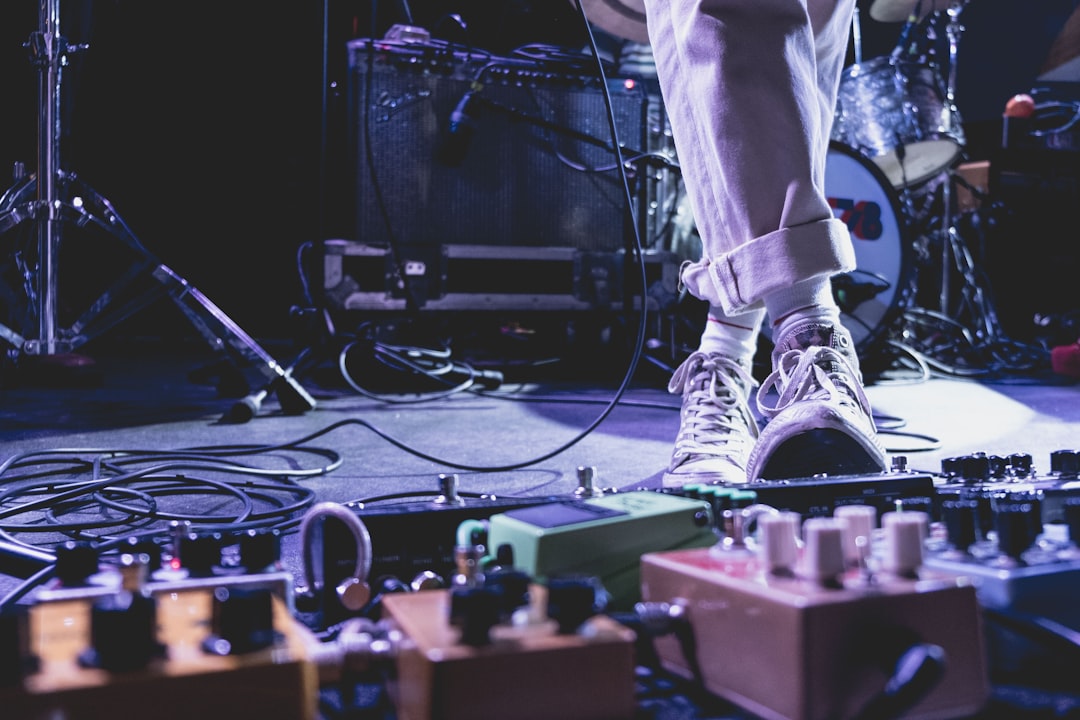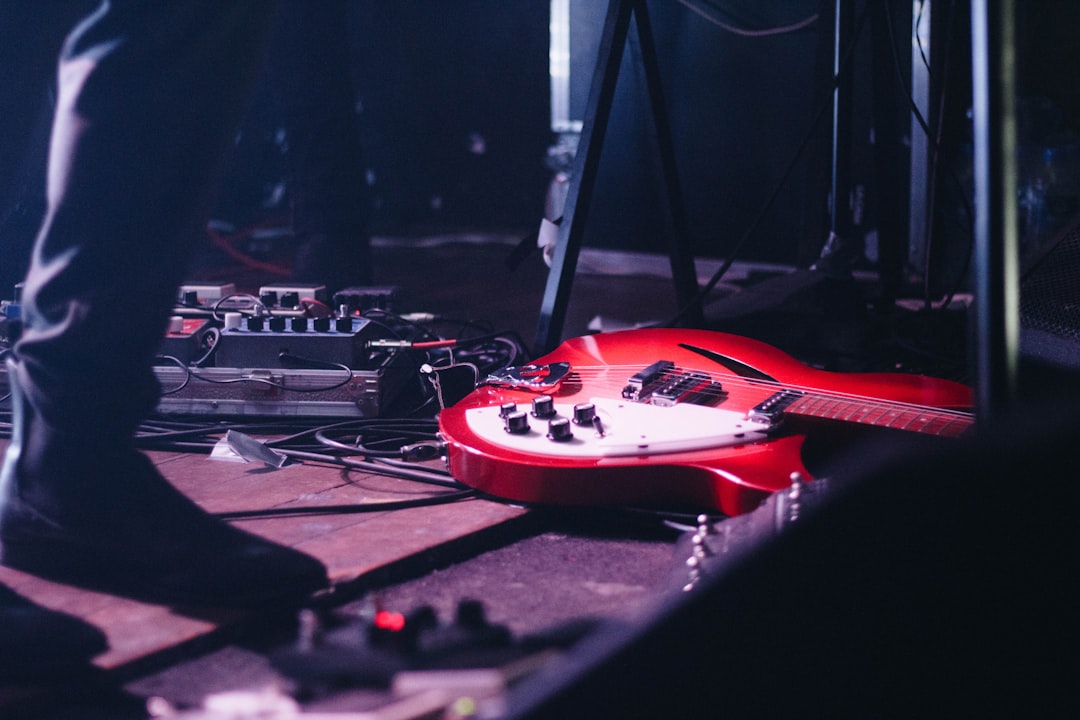

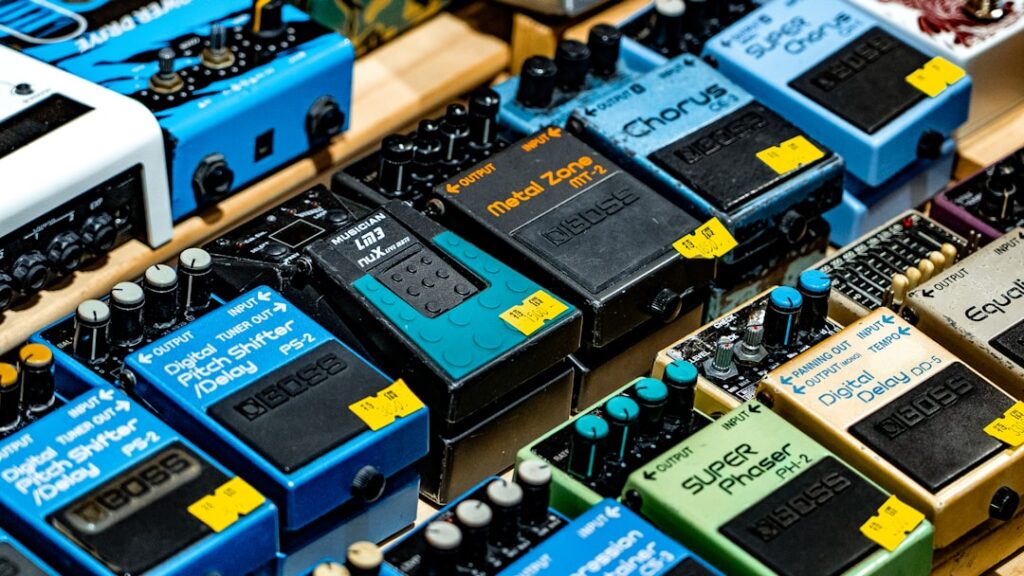
Guitar effects pedals are an essential tool for guitarists looking to enhance their playing and unleash their creativity. These small devices, often referred to as stompboxes, can completely transform the sound of a guitar, adding depth, texture, and unique tones. Whether you’re a beginner or an experienced guitarist, understanding the world of effects pedals can open up a whole new world of possibilities for your playing.
Key Takeaways
- Effects pedals can enhance your guitar playing and creativity by adding unique sounds and tones to your playing.
- There are various types of effects pedals, including distortion, delay, reverb, and more, each with their own distinct sound.
- Building your own effects pedal board requires careful planning and consideration of your specific needs and preferences.
- Experimenting with different effects pedal combinations can lead to new and exciting sounds and tones.
- Effects pedals can be used in various genres of music, and can help improve your live performance and take your guitar creativity to the next level.
The Art of Guitar Effects Pedals: A Beginner’s Guide
Guitar effects pedals are electronic devices that alter the sound of a guitar signal. They work by manipulating the audio signal in various ways, such as adding distortion, delay, reverb, modulation, and more. These effects can be used to create a wide range of sounds and tones, from subtle enhancements to wild and experimental sounds.
There are several different types of effects pedals, each with its own unique function. Some common types include distortion pedals, which add grit and crunch to the guitar’s tone; delay pedals, which create echoes and repeats; reverb pedals, which add ambience and depth; modulation pedals, such as chorus, flanger, and phaser, which create swirling and sweeping sounds; and many more.
For beginners looking to dive into the world of effects pedals, it’s important to choose the right pedals for your needs. Start by considering the style of music you play and the sounds you want to achieve. Research different pedal options and read reviews to get an idea of what might work best for you. It’s also a good idea to start with a few basic pedals before diving into more complex ones. Experimentation is key when it comes to finding your unique sound.
How Effects Pedals Can Enhance Your Guitar Playing and Creativity
Effects pedals can greatly enhance your guitar playing by adding depth and texture to your sound. They can take a simple chord progression or riff and transform it into something much more interesting and dynamic. By experimenting with different effects, you can create a wide range of tones and moods, allowing you to express yourself in new and exciting ways.
In addition to enhancing your playing, effects pedals can also inspire creativity. They can help you find your own unique sound and style by allowing you to experiment with different tones and effects. By pushing the boundaries of what’s possible with your guitar, you can discover new techniques and approaches that you may not have otherwise explored.
Types of Effects Pedals: Distortion, Delay, Reverb, and More
| Type of Effect Pedal | Description | Examples |
|---|---|---|
| Distortion | Creates a distorted or overdriven sound by clipping the audio signal. | Pro Co Rat, Boss DS-1, Electro-Harmonix Big Muff |
| Delay | Repeats the audio signal with a time delay, creating an echo effect. | TC Electronic Flashback, Boss DD-7, Electro-Harmonix Memory Man |
| Reverb | Simulates the sound of a room or space by adding reflections to the audio signal. | TC Electronic Hall of Fame, Boss RV-6, Strymon BigSky |
| Chorus | Creates a shimmering, swirling effect by duplicating the audio signal and modulating the pitch of one of the signals. | Electro-Harmonix Small Clone, Boss CE-2, TC Electronic Corona |
| Phaser | Creates a sweeping, phase-shifted sound by splitting the audio signal and modulating the phase of one of the signals. | MXR Phase 90, Electro-Harmonix Small Stone, Boss PH-3 |
| Tremolo | Creates a pulsating effect by modulating the volume of the audio signal. | Fender Tremolo, Boss TR-2, Strymon Flint |
There are countless types of effects pedals available on the market, each with its own unique function. Here are some of the most common types:
1. Distortion pedals: These pedals add grit and crunch to your guitar’s tone, ranging from mild overdrive to heavy distortion. They are commonly used in rock, metal, and blues genres.
2. Delay pedals: Delay pedals create echoes and repeats of your guitar signal. They can be used to create a sense of space and depth in your playing. From subtle slapback echoes to long, atmospheric repeats, delay pedals are versatile tools for adding texture to your sound.
3. Reverb pedals: Reverb pedals add ambience and depth to your guitar’s tone by simulating the sound of different acoustic spaces. They can range from subtle room reverbs to lush, cathedral-like reverbs.
4. Modulation pedals: Modulation pedals include chorus, flanger, phaser, and tremolo effects. These pedals create swirling, sweeping, and pulsating sounds that can add movement and character to your playing.
5. Wah pedals: Wah pedals are controlled by rocking a foot pedal back and forth, creating a vocal-like “wah” sound. They are commonly used in funk, rock, and blues genres.
These are just a few examples of the many types of effects pedals available. Each type has its own unique function and can be used to create different sounds and tones.
Building Your Own Effects Pedal Board: Tips and Tricks
Building your own effects pedal board is an exciting and creative process. Here are some tips to help you get started:
1. Start with the essentials: Begin by choosing a few basic pedals that cover the essential effects, such as distortion, delay, and reverb. These pedals will form the foundation of your pedal board.
2. Consider your signal chain: The order in which you place your pedals in the signal chain can greatly affect the overall sound. As a general rule, place your distortion and overdrive pedals at the beginning of the chain, followed by modulation effects, delay, and reverb.
3. Experiment with different combinations: Don’t be afraid to experiment with different pedal combinations to find the sound that works best for you. Try placing different pedals before or after each other to see how it affects the overall tone.
4. Invest in a power supply: To avoid having a mess of cables and batteries, invest in a good quality power supply for your pedal board. This will ensure that all your pedals receive consistent power and eliminate any unwanted noise or hum.
5. Arrange your pedals for easy access: When arranging your pedals on the board, consider how easy it will be to access them during a live performance. Place frequently used pedals within easy reach so you can make adjustments on the fly.
By following these tips, you can build a custom effects pedal board that suits your needs and enhances your playing.
How to Use Effects Pedals to Create Unique Guitar Sounds and Tones

Effects pedals offer endless possibilities for creating unique guitar sounds and tones. Here are some examples of how different effects can be used:
1. Distortion: Distortion pedals can be used to add grit and crunch to your guitar’s tone, giving it a more aggressive and powerful sound. They are commonly used in rock and metal genres to create heavy, distorted tones.
2. Delay: Delay pedals can be used to create a sense of space and depth in your playing. By adjusting the delay time and feedback settings, you can create anything from subtle slapback echoes to long, atmospheric repeats.
3. Reverb: Reverb pedals add ambience and depth to your guitar’s tone by simulating the sound of different acoustic spaces. They can be used to create anything from subtle room reverbs to lush, cathedral-like reverbs.
4. Modulation: Modulation pedals, such as chorus, flanger, phaser, and tremolo, can add movement and character to your playing. Chorus pedals create a shimmering, doubling effect; flanger pedals create a swirling, jet-like sound; phaser pedals create a sweeping, swirling effect; and tremolo pedals create a pulsating, rhythmic effect.
By experimenting with different settings and combinations of effects pedals, you can create unique sounds and tones that are all your own.
Experimenting with Different Effects Pedal Combinations
One of the most exciting aspects of using effects pedals is experimenting with different combinations to create new and unique sounds. Here are some tips for getting started:
1. Start with a basic setup: Begin by setting up a basic pedal chain with a few essential effects, such as distortion, delay, and reverb. This will give you a solid foundation to build upon.
2. Add one effect at a time: When experimenting with different combinations, it’s best to add one effect at a time and listen to how it affects the overall sound. This will help you understand how each effect interacts with the others.
3. Listen for balance: As you add more effects to your chain, listen for balance in the overall sound. Make sure that no one effect is overpowering or masking the others.
4. Don’t be afraid to get weird: Effects pedals are meant to be experimented with, so don’t be afraid to get weird and try unconventional combinations. You never know what unique sounds you might discover.
By experimenting with different effects pedal combinations, you can create sounds and tones that are truly unique to your playing style.
The Role of Effects Pedals in Different Genres of Music
Effects pedals play a crucial role in shaping the sound of different genres of music. Here are some examples of how effects pedals are used in popular genres:
1. Rock: Distortion and overdrive pedals are essential in rock music, creating the gritty, aggressive tones that define the genre. Delay and reverb pedals are also commonly used to add depth and space to guitar solos.
2. Blues: Blues guitarists often rely on overdrive and distortion pedals to achieve the warm, gritty tones associated with the genre. Wah pedals are also commonly used to add expressive, vocal-like sounds to solos.
3. Funk: Funk guitarists often use envelope filters and auto-wah pedals to create the signature “wah” sound associated with the genre. Chorus and phaser pedals are also commonly used to add movement and texture to rhythm parts.
4. Ambient/Experimental: Ambient and experimental musicians often rely heavily on delay, reverb, and modulation pedals to create atmospheric and otherworldly sounds. These effects can be used to create lush, ethereal textures and evolving soundscapes.
These are just a few examples of how effects pedals are used in different genres of music. By understanding how effects pedals are used in your favorite genres, you can begin to incorporate them into your own playing.
Maintaining and Troubleshooting Your Effects Pedals
To ensure optimal performance and longevity, it’s important to properly maintain and troubleshoot your effects pedals. Here are some tips:
1. Clean your pedals regularly: Dust and dirt can build up on the switches and jacks of your pedals, affecting their performance. Use a soft cloth or brush to gently clean the exterior of your pedals.
2. Check your cables: Loose or damaged cables can cause unwanted noise or signal loss. Regularly check your cables for any signs of wear and replace them if necessary.
3. Troubleshoot noise issues: If you’re experiencing unwanted noise or hum from your pedals, try isolating the issue by removing one pedal at a time from your chain. This will help you identify which pedal is causing the problem.
4. Repair or replace faulty pedals: If you’re experiencing issues with a specific pedal, such as crackling or loss of signal, it may need to be repaired or replaced. Contact the manufacturer or a qualified technician for assistance.
By properly maintaining and troubleshooting your effects pedals, you can ensure that they continue to perform at their best.
Using Effects Pedals to Improve Your Live Performance
Effects pedals can greatly enhance your live performance by adding depth and texture to your sound. Here are some tips for using effects pedals in a live setting:
1. Practice with your pedals: Before performing live, spend time practicing with your effects pedals to become familiar with their settings and how they affect your sound.
2. Use effects sparingly: While effects can add depth and texture to your sound, it’s important not to overdo it. Use effects sparingly and tastefully to enhance your playing without overpowering it.
3. Make adjustments on the fly: During a live performance, be prepared to make adjustments to your pedal settings on the fly. This will allow you to adapt to the venue and audience and create the best possible sound.
4. Use tap tempo features: If you’re using delay or modulation effects that have tap tempo features, take advantage of them to sync your effects with the tempo of the song.
By using effects pedals strategically in a live setting, you can take your performance to the next level and create a memorable experience for your audience.
Taking Your Guitar Creativity to the Next Level with Effects Pedals
Effects pedals are powerful tools for enhancing your guitar playing and unleashing your creativity. By experimenting with different effects and combinations, you can find your own unique sound and style. Don’t be afraid to push the boundaries of what’s possible with your guitar and explore new techniques and approaches. The possibilities are endless, so keep learning, experimenting, and creating.
Guitar effects pedals are an essential tool for guitarists looking to enhance their playing and unleash their creativity. By understanding the different types of effects pedals and how they can be used, you can create unique sounds and tones that are all your own. Whether you’re a beginner or an experienced guitarist, the world of effects pedals offers endless possibilities for enhancing your playing and finding your unique sound. So keep learning, experimenting, and pushing the boundaries of what’s possible with your guitar. The journey is just beginning.
FAQs
What are guitar effects pedals?
Guitar effects pedals are electronic devices that alter the sound of an electric guitar. They can be used to create a variety of different sounds and effects, such as distortion, delay, reverb, and more.
How do guitar effects pedals work?
Guitar effects pedals work by processing the signal from the guitar and altering it in some way. This can be done using a variety of different methods, such as analog circuits, digital processing, or a combination of both.
What types of guitar effects pedals are there?
There are many different types of guitar effects pedals, including distortion pedals, overdrive pedals, fuzz pedals, delay pedals, reverb pedals, chorus pedals, phaser pedals, flanger pedals, wah pedals, and more.
What are some popular guitar effects pedal brands?
Some popular guitar effects pedal brands include Boss, Electro-Harmonix, MXR, TC Electronic, Strymon, Dunlop, and many others.
Do I need guitar effects pedals?
Whether or not you need guitar effects pedals depends on your personal preferences and playing style. Some guitarists prefer to play with a clean tone, while others enjoy experimenting with different effects and sounds.
How do I choose the right guitar effects pedals?
Choosing the right guitar effects pedals depends on your playing style, the type of music you play, and the sound you are trying to achieve. It’s important to do your research and try out different pedals to find the ones that work best for you.