

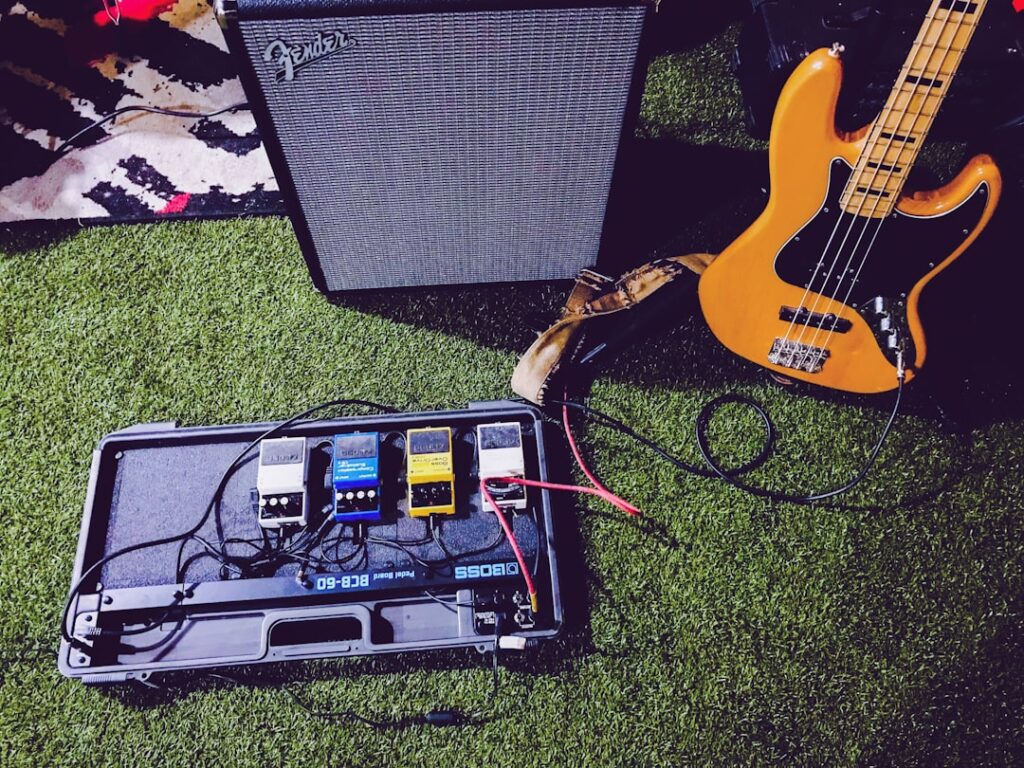
The Fender Bassman is a legendary amplifier that has played a significant role in shaping the sound of modern music. It was first introduced in 1952 as a bass amplifier, but it quickly gained popularity among guitarists for its warm and powerful tone. The original Bassman was a 50-watt tube amplifier with a simple control layout, featuring two channels with separate volume controls and a shared tone control. It was designed to provide clean headroom and a solid foundation for bass and guitar players alike.
In the 1960s, the Fender Bassman became a staple in the emerging rock and roll scene, with artists like Eric Clapton and Jimi Hendrix using it to achieve their iconic tones. The amplifier’s rich, dynamic sound and responsive overdrive made it a favorite among musicians looking for a versatile and powerful amplifier. Over the years, Fender has released various iterations of the Bassman, each with its own unique features and improvements. Today, the Fender Bassman remains a popular choice for musicians seeking a classic, vintage-inspired tone with modern reliability and performance.
The Fender Bassman has left an indelible mark on the music industry, influencing countless musicians and shaping the sound of popular music for decades. Its rich history and timeless design have cemented its status as a true classic in the world of amplifiers, and it continues to be a go-to choice for players seeking a versatile and powerful amplifier with a rich, dynamic sound.
Understanding the Features and Controls of the Fender Bassman
The Fender Bassman is known for its simple yet effective control layout, which allows players to dial in their desired tone with ease. The amplifier typically features two channels, each with its own volume control, as well as a shared tone control that allows for further shaping of the sound. Additionally, many models include a presence control, which adjusts the high-frequency response of the amplifier, as well as a master volume control for overall output level.
One of the key features of the Fender Bassman is its tube-driven circuitry, which provides a warm, responsive tone with plenty of headroom. The amplifier’s tube complement typically includes 6L6 power tubes and 12AX7 preamp tubes, which contribute to its signature sound. Additionally, many modern iterations of the Bassman include features such as built-in reverb and effects loops, providing players with even more versatility and sonic possibilities.
Understanding the features and controls of the Fender Bassman is essential for getting the most out of this iconic amplifier. By familiarizing yourself with its layout and functionality, you can unlock its full potential and dial in the perfect tone for your playing style.
Tips for Getting the Best Tone from Your Fender Bassman
Getting the best tone from your Fender Bassman requires a combination of understanding its features and controls, as well as experimenting with different settings and techniques. One tip for achieving great tone with the Bassman is to start with the volume controls set relatively low and gradually increase them until you reach your desired level of overdrive. This allows you to take advantage of the amplifier’s natural tube saturation and achieve a warm, dynamic tone without overwhelming the sound.
Another tip for getting the best tone from your Fender Bassman is to experiment with the shared tone control to find the perfect balance of treble and bass frequencies. By adjusting this control, you can tailor the amplifier’s response to suit your playing style and achieve a balanced, well-rounded tone. Additionally, utilizing the presence control can help you fine-tune the high-frequency response of the amplifier, allowing you to cut through the mix with clarity and definition.
In addition to understanding the amplifier’s controls, using high-quality cables and guitar pickups can also contribute to achieving the best tone from your Fender Bassman. By investing in premium components, you can ensure that your signal chain remains clear and transparent, allowing the amplifier to faithfully reproduce your instrument’s natural sound.
Exploring Different Playing Styles with the Fender Bassman
| Playing Style | Tone Setting | Gain Level | Effect Used |
|---|---|---|---|
| Fingerstyle | Mid-boost | Low | None |
| Slap Bass | High-cut | Medium | Compressor |
| Pickstyle | Flat | High | Overdrive |
The Fender Bassman is a versatile amplifier that can accommodate a wide range of playing styles, from clean and articulate to gritty and overdriven. For players seeking a clean, punchy tone, the Bassman excels at delivering a tight low end and sparkling highs, making it an ideal choice for genres such as jazz, country, and blues. By dialing in lower gain settings and utilizing the shared tone control, you can achieve a pristine, dynamic sound that responds beautifully to your playing dynamics.
For those looking to explore more aggressive playing styles, the Fender Bassman offers plenty of headroom and natural overdrive that can be pushed into rich saturation with higher gain settings. This makes it well-suited for rock, blues, and even heavier genres like hard rock and metal. By cranking up the volume controls and experimenting with different pickup configurations on your guitar, you can unleash the full potential of the amplifier’s tube-driven circuitry and achieve a thick, harmonically rich overdrive that sings with sustain and character.
No matter your preferred playing style, the Fender Bassman offers a versatile platform for expressing your musical ideas with clarity and power. By experimenting with different settings and techniques, you can unlock its full potential and discover new sonic possibilities that inspire your creativity.
Modifying and Customizing Your Fender Bassman for Maximum Performance
Modifying and customizing your Fender Bassman can be a rewarding way to tailor its sound and functionality to suit your specific needs as a player. One popular modification for the Bassman is swapping out the stock tubes for premium aftermarket options, which can enhance its overall performance and tonal characteristics. Upgrading to high-quality 6L6 power tubes and 12AX7 preamp tubes can result in improved clarity, headroom, and harmonic richness, allowing you to achieve a more refined and dynamic sound.
Another common modification for the Fender Bassman is installing a speaker upgrade to enhance its overall sonic capabilities. By replacing the stock speakers with high-quality aftermarket options, you can achieve improved frequency response, tighter bass response, and increased overall clarity. This can be particularly beneficial for players seeking a more balanced and articulate tone that translates well in live performance and recording situations.
In addition to tube and speaker upgrades, customizing the circuitry of the Fender Bassman can also yield significant improvements in its performance. Modifying components such as capacitors, resistors, and transformers can result in enhanced tonal characteristics, improved dynamic response, and reduced noise levels. By working with a qualified technician or experienced amp builder, you can explore various modification options to tailor the amplifier to your specific sonic preferences.
Using the Fender Bassman in a Band Setting

Using the Fender Bassman in a band setting requires careful consideration of its volume capabilities, tonal characteristics, and overall sonic footprint. The amplifier’s 50-watt tube-driven circuitry provides plenty of headroom for cutting through the mix with clarity and power, making it well-suited for live performance situations. When using the Bassman in a band setting, it’s important to experiment with different volume levels to find the right balance between stage volume and overall tonal impact.
One approach to using the Fender Bassman in a band setting is to utilize its natural overdrive characteristics to add warmth and character to your guitar tone. By dialing in higher gain settings and adjusting the shared tone control to suit your playing style, you can achieve a thick, harmonically rich overdrive that complements other instruments in the band. This can be particularly effective for genres such as blues, rock, and country where expressive lead lines and dynamic rhythm playing are essential.
Another consideration when using the Fender Bassman in a band setting is its overall tonal footprint and how it interacts with other instruments in the mix. By working with your bandmates to find the right balance of frequencies and dynamics, you can ensure that the amplifier’s rich, dynamic sound contributes positively to the overall sonic palette of the band.
Maintenance and Care for Your Fender Bassman
Maintaining and caring for your Fender Bassman is essential for ensuring its long-term reliability and performance. One important aspect of maintenance is regularly inspecting and cleaning the amplifier’s components, including tubes, jacks, switches, and controls. By keeping these components free from dust, debris, and oxidation, you can prevent potential issues such as noise, intermittent connections, or premature component failure.
Another key aspect of maintaining your Fender Bassman is ensuring proper ventilation and airflow around the amplifier to prevent overheating. Tube amplifiers generate significant heat during operation, so it’s important to place them in well-ventilated areas with ample space around them for heat dissipation. Additionally, periodically checking for proper biasing of the power tubes can help ensure optimal performance and tube longevity.
In addition to regular maintenance tasks, it’s important to handle your Fender Bassman with care during transportation and storage. Using a protective cover or case when transporting the amplifier can help prevent damage from bumps, scratches, or other accidents. Additionally, storing the amplifier in a dry, climate-controlled environment can help prevent issues such as corrosion or mold growth.
By following these maintenance tips and caring for your Fender Bassman properly, you can ensure that it continues to deliver reliable performance and exceptional tone for years to come. Regular maintenance not only preserves the amplifier’s value but also contributes to its overall longevity and sonic integrity.