

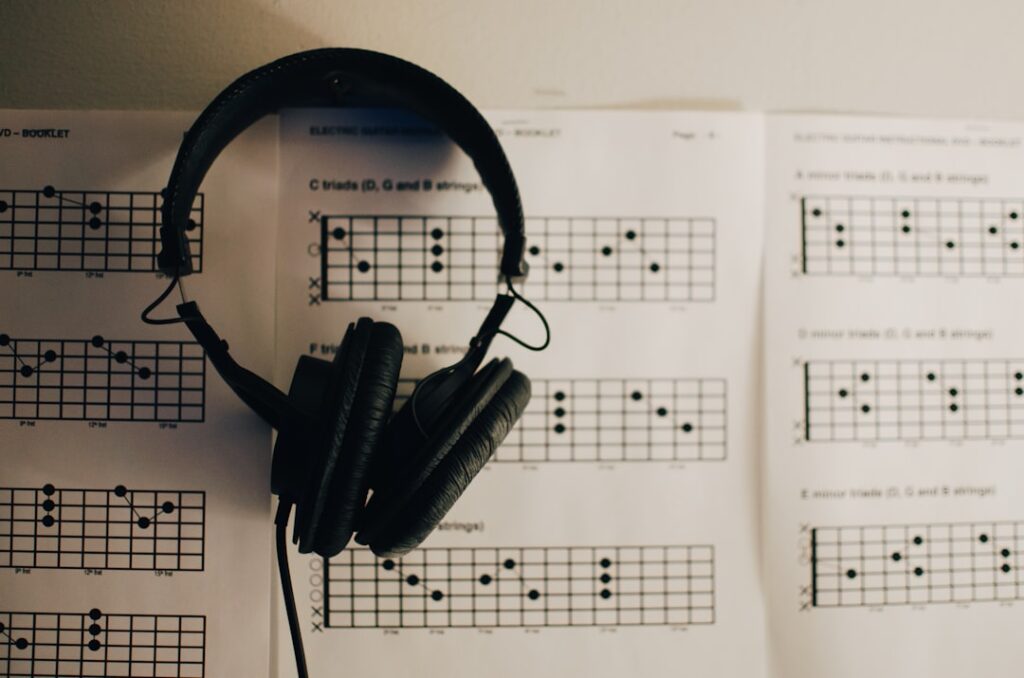
Guitar chords are the building blocks of music, serving as the foundation upon which melodies and harmonies are constructed. At their core, chords are simply combinations of notes played simultaneously. In Western music, chords are typically built from scales, with the most common being the major and minor scales.
A chord is often defined by its root note, which is the note that gives the chord its name, and additional notes that create the desired sound. For instance, a C major chord consists of the notes C, E, and G, while an A minor chord is made up of A, C, and E. Understanding these fundamental concepts is crucial for any aspiring guitarist.
The structure of chords can be further explored through intervals, which are the distances between notes. The most basic interval is a second, which consists of two adjacent notes in a scale. When building chords, musicians often stack intervals on top of one another.
For example, a major chord is formed by combining a root note, a major third (four half steps above the root), and a perfect fifth (seven half steps above the root). This stacking of intervals creates a rich harmonic sound that is pleasing to the ear. As you delve deeper into guitar chords, you’ll discover various types such as diminished, augmented, and seventh chords, each adding unique flavors to your playing.
Key Takeaways
- Understanding the basics of guitar chords is essential for beginners to grasp the fundamentals of playing the instrument.
- Learning common chord shapes and fingerings is crucial for developing muscle memory and dexterity in playing different chords.
- Mastering chord transitions and progressions is key to playing smoothly and seamlessly, especially when switching between chords in a song.
- Using chord charts and diagrams can help players visualize and understand the finger placements for various chords.
- Practicing with popular songs can make learning chords more enjoyable and practical, as it allows players to apply their skills to real music.
Learning Common Chord Shapes and Fingerings
Once you grasp the basic concepts of guitar chords, the next step is to familiarize yourself with common chord shapes and fingerings. The most frequently used chords in popular music include major and minor chords, as well as dominant seventh chords. These chords are typically played in open positions on the guitar neck, which means they utilize open strings along with fretted notes.
For example, the open E major chord requires you to place your fingers on the first fret of the G string, second fret of the A string, and second fret of the D string while allowing the E string to ring open. To effectively learn these shapes, it’s beneficial to practice them in isolation before incorporating them into songs. Start by placing your fingers on the correct frets and strumming the chord slowly to ensure each note rings clearly.
If you notice any muted or buzzing sounds, adjust your finger placement or apply more pressure to the strings. As you become more comfortable with these shapes, you can begin to explore barre chords, which allow you to play chords higher up on the neck by using one finger to press down multiple strings across a fret. This technique opens up a world of possibilities for playing different chord voicings.
Mastering Chord Transitions and Progressions

Mastering chord transitions is essential for fluid playing and creating a seamless musical experience. Transitioning between chords can be challenging for beginners due to the need for finger movement and positioning. To improve your transitions, start by practicing two-chord progressions such as G to C or D to Focus on moving your fingers smoothly from one shape to another while maintaining a steady rhythm.
It can be helpful to use a metronome to keep time and gradually increase your speed as you become more comfortable. Chord progressions are sequences of chords that form the harmonic backbone of a song. Familiarizing yourself with common progressions like I-IV-V (C-F-G in the key of C) or ii-V-I (Dm-G-C in C) will enhance your ability to play along with various styles of music.
Many popular songs utilize these progressions, making them invaluable for any guitarist. As you practice these progressions, pay attention to how different combinations evoke different emotions and atmospheres in music. This understanding will not only improve your playing but also deepen your appreciation for songwriting.
Using Chord Charts and Diagrams
Chord charts and diagrams are essential tools for guitarists at all levels. A chord chart typically displays the names of chords along with their corresponding lyrics and sometimes includes strumming patterns or fingerpicking instructions. This format allows musicians to follow along with songs easily while providing a visual reference for chord changes.
On the other hand, chord diagrams visually represent finger placement on the fretboard, showing which strings to press down and which should remain open. When reading chord diagrams, it’s important to understand how to interpret them correctly. The vertical lines represent the strings of the guitar, while horizontal lines indicate the frets.
Dots on the diagram show where to place your fingers; for example, a dot on the second fret of the A string indicates that you should press that string down at that fret. Familiarizing yourself with these diagrams will enable you to learn new chords quickly and efficiently. Additionally, many online resources provide extensive libraries of chord charts for popular songs, making it easier than ever to expand your repertoire.
Practicing with Popular Songs
One of the most enjoyable ways to practice guitar chords is by playing along with popular songs. Many well-known tracks utilize simple chord progressions that are perfect for beginners. For instance, songs like “Knockin’ on Heaven’s Door” by Bob Dylan or “Sweet Home Alabama” by Lynyrd Skynyrd feature straightforward chord changes that can be mastered with some dedicated practice.
By learning these songs, you not only improve your technical skills but also gain insight into song structure and composition. When practicing with songs, it’s beneficial to break them down into manageable sections. Start by learning just a few measures at a time before attempting to play through an entire song.
This approach allows you to focus on accuracy and timing without feeling overwhelmed. Additionally, consider playing along with recordings or backing tracks to develop your sense of timing and rhythm. As you become more confident in your playing, challenge yourself by exploring more complex songs that incorporate additional chords or unique strumming patterns.
Utilizing Online Resources and Tutorials

In today’s digital age, countless online resources are available for guitarists seeking to improve their skills. Websites like YouTube offer an abundance of video tutorials covering everything from basic chord shapes to advanced techniques like fingerstyle playing or jazz chords. Many experienced guitarists share their knowledge through step-by-step lessons that cater to various skill levels, making it easy for learners to find content that suits their needs.
In addition to video tutorials, numerous apps and websites provide interactive tools for practicing guitar chords. Some platforms offer virtual fretboards where users can see chord shapes in real-time as they play along with songs or exercises. Others feature gamified learning experiences that make practicing more engaging and fun.
By taking advantage of these resources, you can supplement your practice routine and discover new techniques that enhance your overall musicianship.
Tips for Improving Chord Accuracy and Speed
Improving chord accuracy and speed requires consistent practice and attention to detail. One effective method is to isolate challenging transitions between specific chords and practice them repeatedly until they feel comfortable. For example, if you struggle with transitioning from C major to G major, spend time focusing solely on that movement before incorporating it into a full progression.
Gradually increase your speed while maintaining clarity in each note. Another useful technique is to incorporate finger exercises into your practice routine. Simple exercises that involve moving between different chord shapes can help build muscle memory and dexterity in your fingers.
For instance, try playing a series of common chords in succession—C major, A minor, D minor, G major—while focusing on clean transitions between each shape. Additionally, consider using a metronome to set a steady tempo; this will encourage you to play at a consistent speed while developing your timing.
Troubleshooting Common Chord Challenges
As you progress in your guitar journey, you may encounter various challenges related to playing chords effectively. One common issue is finger placement; if certain notes sound muted or buzzed when strumming a chord, it may indicate improper finger positioning or insufficient pressure on the strings. To troubleshoot this problem, ensure that your fingers are pressing down directly behind the frets rather than in the middle of the fret space.
Another challenge many beginners face is strumming technique; inconsistent strumming can lead to uneven sound quality across different strings. To address this issue, focus on developing a relaxed wrist motion while strumming rather than relying solely on arm movement. Practice strumming downwards and upwards in a controlled manner while maintaining a steady rhythm.
Over time, these adjustments will lead to improved accuracy and consistency in your playing. By understanding the fundamentals of guitar chords and dedicating time to practice common shapes and transitions, you can build a solid foundation for your musical journey. Utilizing resources like chord charts and online tutorials will further enhance your learning experience while allowing you to explore popular songs that inspire you.
With patience and perseverance, you’ll find yourself mastering not only individual chords but also the art of playing music that resonates with both you and your audience.